
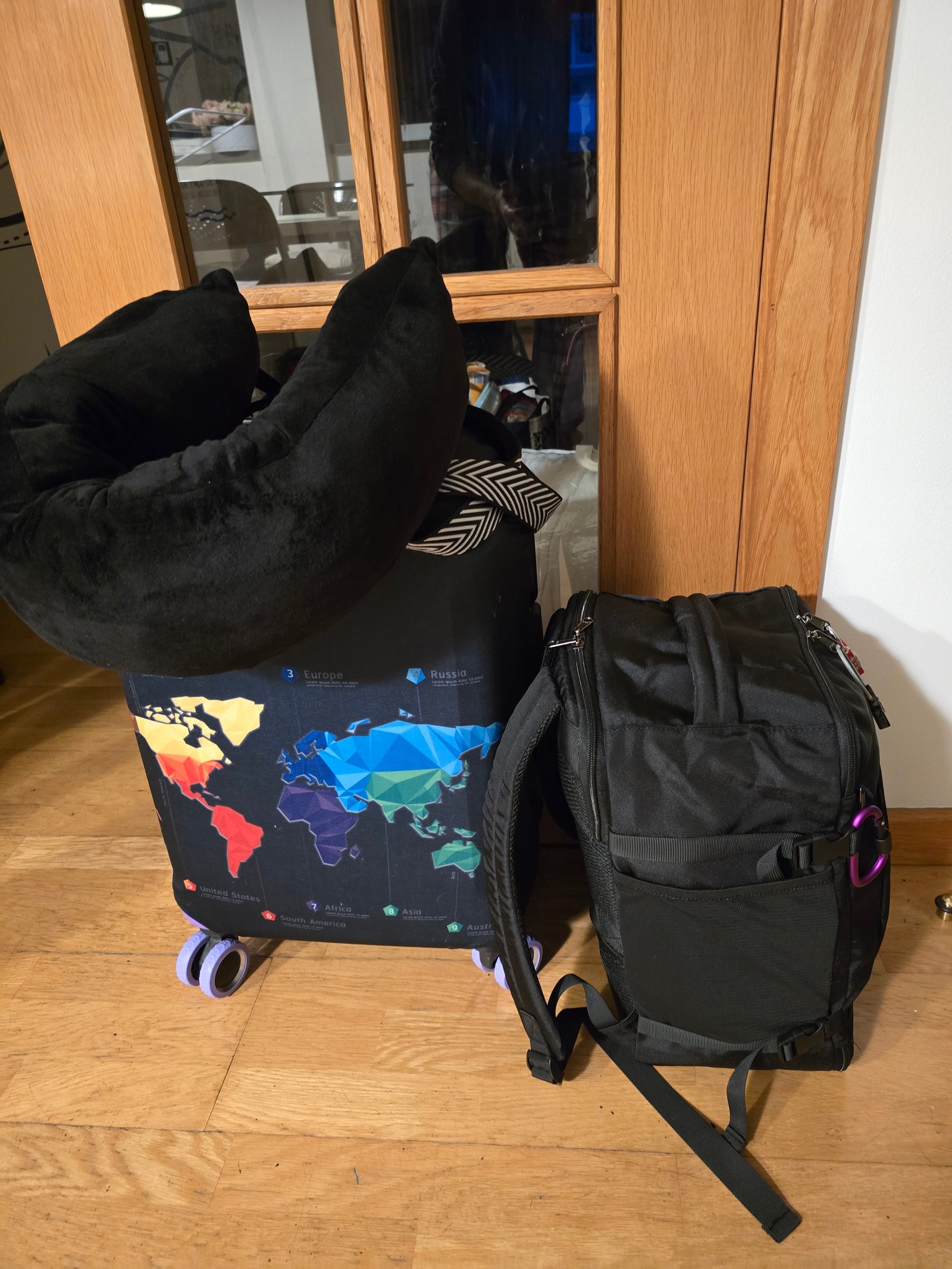
Midnight at a border in the Balkans, no internet, no one in the world knowing where I was, and a police officer holding my document on the other side of a closed window. That was the night I understood, in practice, what travel safety really means, and why being a woman traveling alone isn't the same as being a man traveling alone.
I don't like the idea of living in fear. I prefer to believe that if something's going to happen, it'll happen, no matter where in the world I am. But that's never stopped me from at least researching the risks of every place I go to. And there was one specific situation that permanently changed how I think about this.
The midnight bus
I always prefer night buses: you get more out of the trip and you also save a night's accommodation. I took one leaving Budva, Montenegro, heading to Belgrade, Serbia, around 8pm, with arrival expected at 6am. I got on, fell asleep, and out of nowhere I woke up to the lights turning on and the bus stopping: the border. Immigration control to leave Montenegro, everyone gets off and walks through the control booths. Five minutes later, the same scene to enter Serbia.
When it was my turn, I handed over my Portuguese citizen card. The officer asked for ID or passport, at the time I still hadn't gotten my Portuguese passport, so I explained that document was what I had. He closed the window, left the booth, and headed toward a bigger building, taking my document with him.
I checked the time: a little after midnight. I'd bought data for Serbia, but the eSIM hadn't activated when I crossed the border. I had zero communication, and no one knew I'd taken that bus, let alone that I was headed to Belgrade.
"You can't enter with this document"
The officer came back with another one and went straight to it: "You can't enter Serbia with this document." I knew I was right, within the law, but I had no internet to prove anything right then. I took a deep breath, stayed calm, and asked: "Okay, can you help me get back to Budva then?" The answer came dry: "You'll get on the next bus heading there, should be in about 2 hours. Go get your bags."
On the outside I tried to look calm. On the inside, fear was taking over, and I just kept repeating to myself that it'd be okay: I'd catch the bus back, go back to the hostel, and figure out the rest from there.
That's when the second officer came back and said: "Give me your ID again." And that's when I really froze. He took the document back inside the bigger building, and what must have been about 15 minutes felt like a lot more. My mind just kept circling one question: what if he simply doesn't give it back, and says he never asked for anything? Out of nowhere, he called me back to the booth and said I was going to enter Serbia, but almost like a personal favor. I thanked him and went back to the bus, which still hadn't left, I think they have some protocol they follow before leaving any passenger behind at the border.
After that night, I thought a lot about travel safety, not just as a woman, but in general, because this could have happened to anyone.
Why nomads need more caution
Traveling alone constantly asks for a bit more attention than a simple vacation trip, and that goes for both women and men. Us nomads are always crossing borders, moving around, going on new outings and adventures, and there's almost never anyone nearby who actually knows us.
That's why I created a safety-net system with my closest friends:
- A cloud folder shared with them, with flights, accommodations, travel insurance, passport, and visas
- A WhatsApp group where I check in every time I'm on the move, and check in again when I arrive
- My real-time Google location, shared with that same group
I strongly recommend setting up this system, even for a regular vacation trip. At the very least, the cloud folder with the details and shared location already make a huge difference.
And being a woman traveling alone...
That's where an extra layer of caution comes in. The first rule is: never post where you are in real time. And if a stranger on the street starts asking where you're staying, your name, whether you're alone, don't give any real information. Make up another name, think of another hotel, say you don't remember the name of the place. And you're never alone: your friends are nearby sleeping, or you just decided to go out alone that particular day.
Keep reading
Tours and activities in the Balkans
Explore Montenegro and Serbia with guided tours and local experiences.